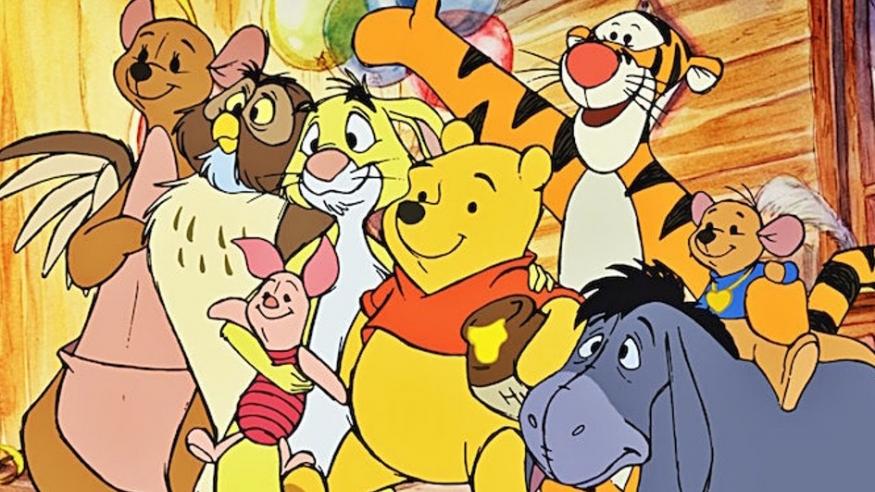
In the popular children’s book now adapted into an animation series, is the story of an anthropomorphic bear with several friends who are characterized by human attributes that make them unique. Some of these anthropomorphic characteristics are considered innate tendencies of human psychology. Acting as a medium to convey behavioural studies to young children. Each character within the show is different, their unique personalities, together, show the various ways in which different people behave. Examining how each one defers from the other creates a sense that they are more than just personalities but in perspective, represent mental disorders.
The theory that the Winnie The Pooh character all represent a mental health disorder was first brought up as a vague fan theory. However, it is true that when watching the show, from individual perspectives, the mannerisms of the characters represent disorders. A few arguments go further into depth on the subject and bring up topics such as all of the characters are just a portrayal of the different mental illnesses that Christopher Robin has. Further analysis of the psychological aspects of this show can provide us with if the theory that the characters represent mental disorders.
The simplest method of concluding is to investigate several characters character by themselves and then to implement what we know to the interpretation of how the profiles contrast from one and other.
Winnie The Pooh
Often described as a ‘cute, cuddly and loving’ teddy bear Winnie The Pooh often called ‘Pooh Bear’ is an anthropomorphic toy bear and is the main character of Winnie The Pooh. Pooh is a sincere and simple character but is often slow-witted and takes time to understand things. One of his well-known traits includes his love for honey. However, he is addicted to eating and suffers from eating compulsively. This is evident because it as quoted that he stockpiles honey for later consumption in secret. Rather than setting regular meal times, Pooh Bear eats honey at random times throughout the day. When taking this as an analogy, compulsive eating disorders often lead to obesity. Quite evident by Pooh’s mannerisms, behaviour and physique he is a victim of an eating disorder. Although this is just a theory, when implementing it in perspective of a show wherein opinion may have a deeper psychological understanding. There is an increased possibility that it is true.
Piglet
Piglet is Pooh’s closest friend and is often described as timid and shy. Throughout the show, piglet is portrayed as fearful and nervous. It is characterized in the show by his physical characteristics, he often stutters and runs or hides when confronted by something he is afraid of. Stories in the series about him are often based on his fears and how he can face them. This is a potential portrayal of anxiety disorder as several of Piglet’s characteristics such as his avoidance of confrontation, the stutter of speech and other physical characteristics used to create an analogy for anxiety disorder. Examples of such traits are piglet’s short height, pink skin and magenta jumper and his non-verbal language. The Disney adaptation does its best to show how one can overcome such fears and problems by building courage and mental strength. Thus, further supporting the theory that the characters of Winnie The Pooh represent mental health disorders. The psychological aspect to the show discreetly emphasizes the importance of these disorders and how one can fight it.
Tigger
Tigger is a fictional tiger in the series known for his love of bouncing and hyperactive behaviour. He is cheerful, outgoing and is confident in himself. Several of his character traits within the cartoon depicts him as being hyperactive and eccentric. His behavioural analysis concludes that he is often talking up for himself. His attributes describe a portrayal of Attention Deficit Hyperactive Disorder. Thus, another character following the show’s theme of portraying disorders with the physical and behavioural characteristics of characters in the show.
These characters each match the description of a mental disorder and provides us with the ability to analyze the behavioural contrast to conclude within the psychological analysis of this animation series. However, the behavioural difference is non-existent as many of the characters do portray mental illnesses and in fact, have similarities. During this behaviour analysis, I discovered that several other examples exist in the show but are not as prominent as ones listed in the cases, such as Eeyore depicting signs of a major depressive disorder. Such examples bring us to the conclusion that there is a psychological theory in which the characters of Winnie The Pooh describe mental health disorders and use the show as a medium to portray the importance of the nature of mental health disorders from a perspective that can be analysed by a broad variety of viewers.
 ActiMind